
HOW TO explain the astonishing diversity of life?
This question lies at the heart of my research. As an evolutionary biologist, I am fascinated by how a single ancestral origin has given rise to the immense diversity of organisms we observe today, and by the extent to which these processes are predictable. My work explores the mechanisms that generate and maintain biodiversity, and examines how evolution is shaped by deterministic forces such as natural selection versus stochastic processes.

My research is inherently interdisciplinary, combining evolutionary biology, ecology, genetics and genomics, computer simulations, and conceptual synthesis. I use comparative approaches – e.g., comparing populations that have evolved under similar or different environmental conditions – to identify recurring genetic and phenotypic patterns, and experimental approaches to test the mechanisms underlying them.
Research Themes
How do environmental sources of selection drive evolutionary change?
Specific environmental factors that generate selection are often difficult to identify. My research aims to uncover the sources of selection that shape evolutionary trajectories, with a particular focus on biotic interactions such as competition and predation. Using field experiments and natural systems, I investigate how the presence or absence of interacting species modifies selection pressures, drives phenotypic divergence, and can ultimately contribute to the emergence of reproductive isolation.
What are the genomic foundations of adaptation and speciation?
A central question in evolutionary biology is how ecological divergence becomes encoded in the genome. I study the genetic architecture of adaptation, asking how many loci underlie adaptive traits, where they are located in the genome, and how their effects are distributed. Using population genomics, genetics, and experimental approaches, I am interested in how selection shapes genomic variation and how repeatable these patterns are across independent evolutionary events. This includes work on parallel evolution, chromosomal variation, and the genomic signatures associated with divergence under different ecological conditions.
How does recombination shape and respond to selection?
Variation in the rate of recombination both shapes evolutionary responses and evolves under selection. I am interested in the causes and consequences of variation in recombination landscapes, with a recent focus on structural variants such as chromosomal inversions that locally suppress recombination and maintain co-adapted gene complexes. By integrating genomic analyses with empirical systems, I investigate how recombination modulates genetic variation, the efficiency of selection, and the balance between adaptation, gene flow, and divergence.
What drives intraspecific variation?
Substantial variation exists within species – not only among populations in different environments, but also among populations in seemingly similar habitats and among individuals within populations, such as between the sexes. I have become increasingly interested in the ecological causes of this intraspecific variation and the processes that generate and maintain it. Using comparative approaches and field experiments, I would like to understand how environmental factors and selective pressures produce phenotypic differences at multiple levels. This includes describing variation in both wild and common-garden raised individuals, primarily in the threespine stickleback, and experimentally testing the ecological mechanisms underlying it.
Can habitat choice drive divergence?
Adaptation may occur not only through selection-imposed changes on populations in different environments, but also through the choices organisms make about where they live. I study how habitat preference and non-random movement contribute to divergence between populations. Using field studies and experiments, I examine how behavioral and ecological processes interact with selection to shape patterns of gene flow and, ultimately, the early stages of diversification.
How predictable is evolution?
To what extent does evolution follow repeatable paths, and why so? I address this question by combining comparative analyses across natural populations with experimental approaches. By studying replicated instances of divergence across environments and geographic regions, I ask when evolution produces similar outcomes – and when it does not. Beyond its empirical focus, this work engages with broader conceptual questions about the predictability and limits of evolutionary change, and with how we can make reliable inferences about general principles from complex biological systems. In this way, my research connects evolutionary biology with perspectives from the philosophy of science, using empirical data to inform more general questions about how scientific understanding is built.
SOME Snippets from my research (non-chronological)
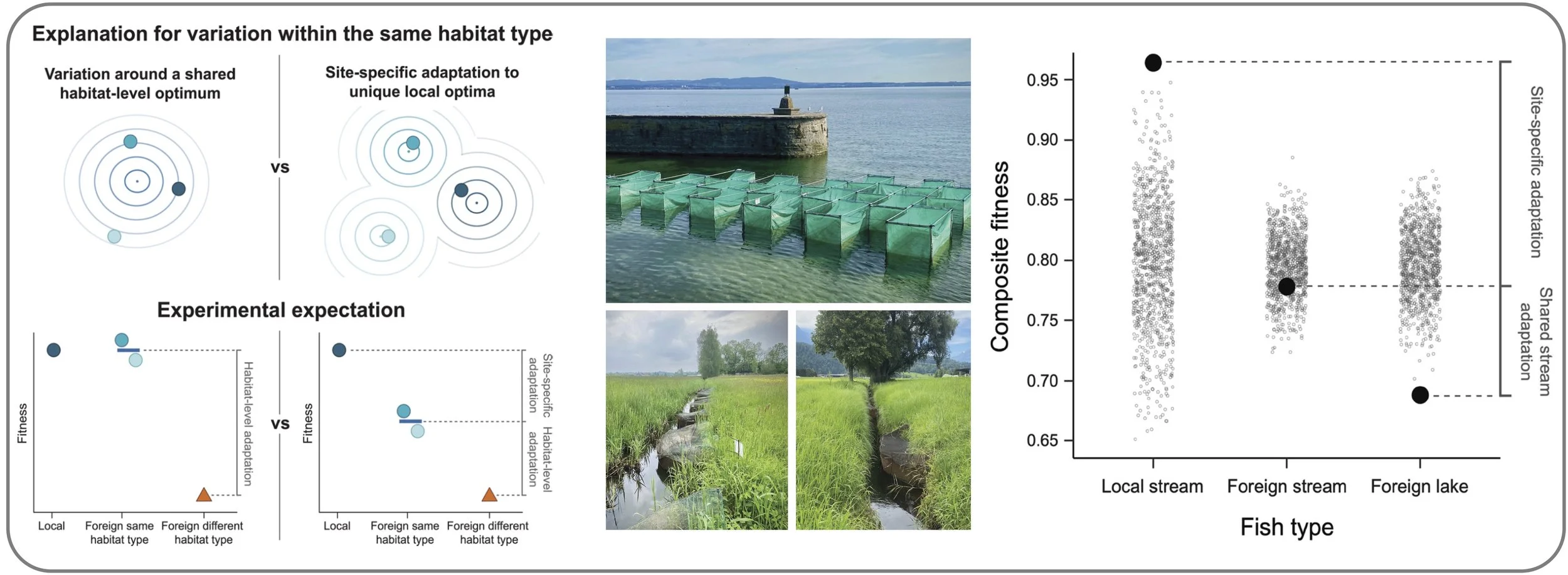
Quantifying local adaptation. How local is local adaptation? Using a multi-population transplant experiment with lab-raised lake and stream stickleback fish, we uncover a surprisingly high degree of fine-scale local adaptation. Our results suggest that populations can be much more finely tuned to their specific local environments than broad habitat categories might imply. This has important implications for how we interpret non-parallel divergence in phenotypes and genome scans, for the predictability of evolution, and, more broadly, for the limits of comparative inferences in evolutionary biology. (Roesti et al. 2026)
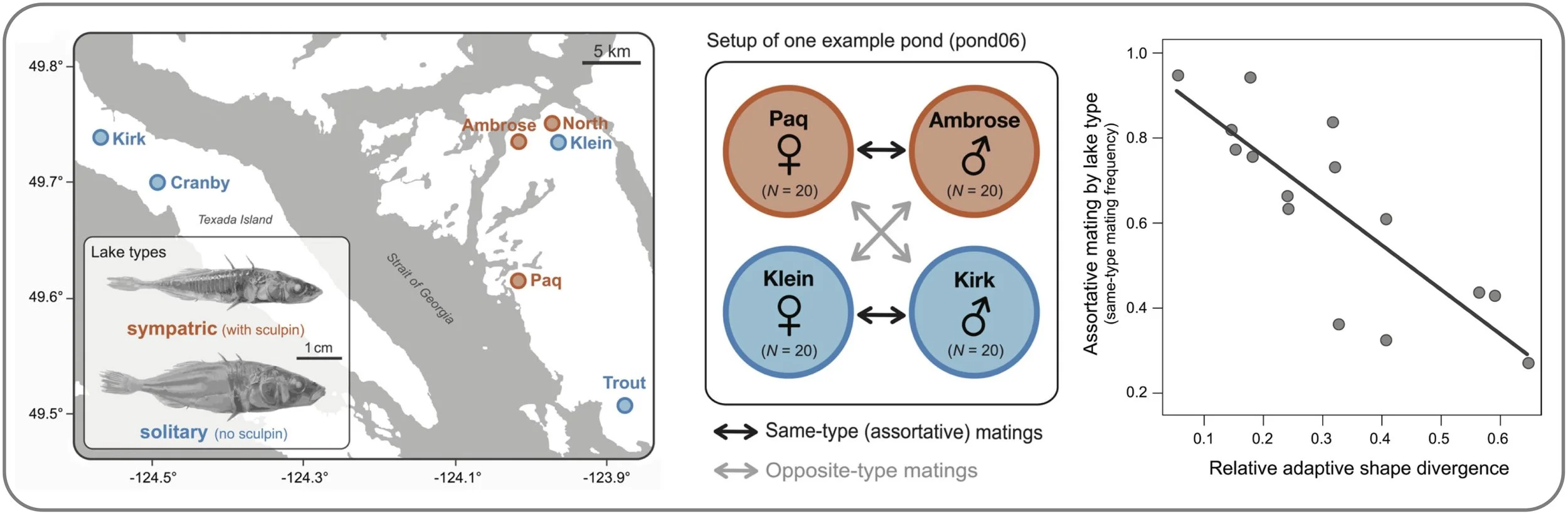
Ecology jump-starts speciation in geographic isolation. We experimentally simulated secondary contact between allopatric stickleback populations from postglacial lakes that either contained or lacked competing sculpin. We find that populations from these distinct ecological contexts evolved pronounced differences in mate choice, and that the strength of this premating isolation increased with the degree of adaptive divergence both in body morphology and at the genomic level. Collectively, these findings demonstrate that ecological adaptation in allopatry can directly facilitate the early evolution of reproductive isolation. (Roesti et al. 2025)
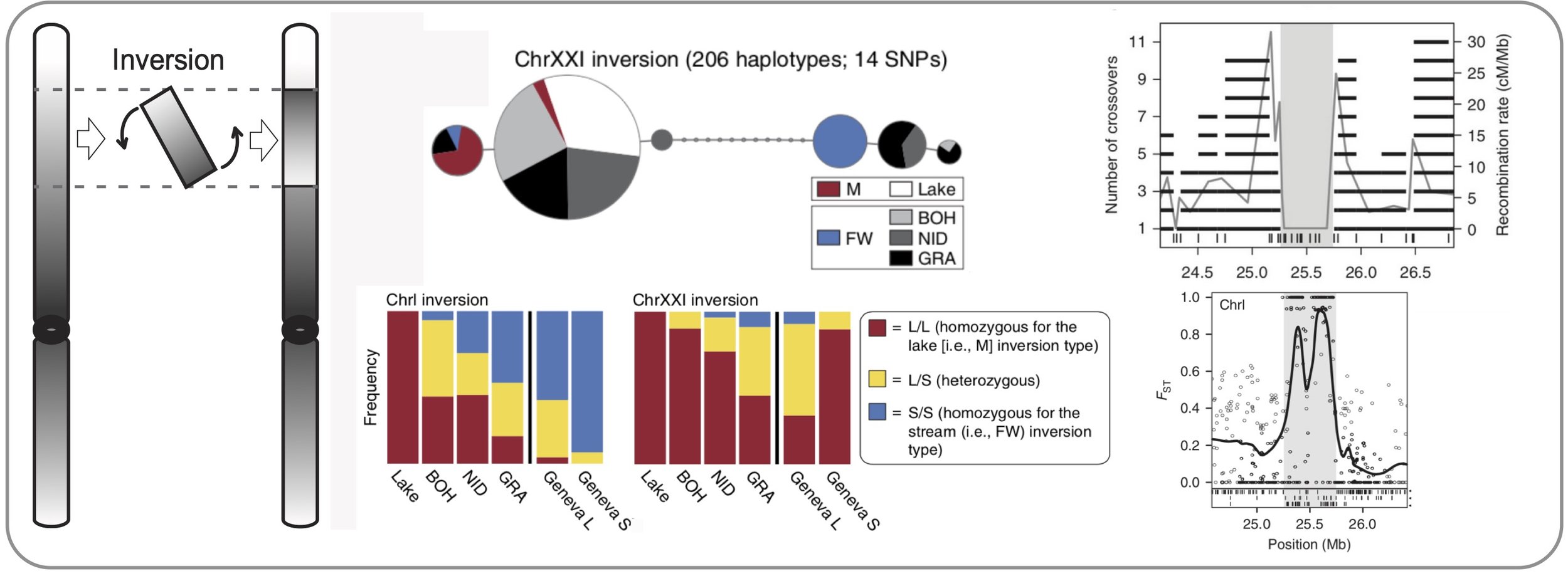
Inversions & adaptation. We show that old chromosomal inversions differentiate parapatric lake and stream stickleback in a Central European watershed. Because lake-stream differentiation at these inversions occurs repeatedly, the inversions are likely important for adaptive divergence. We show experimentally that recombination between the two inversion variants is absent. However, genomic differentiation between individuals carrying different variants suggests that rare recombination events – such as double crossovers or gene conversion – have occurred in the center of the inversions. (Roesti et al. 2015)
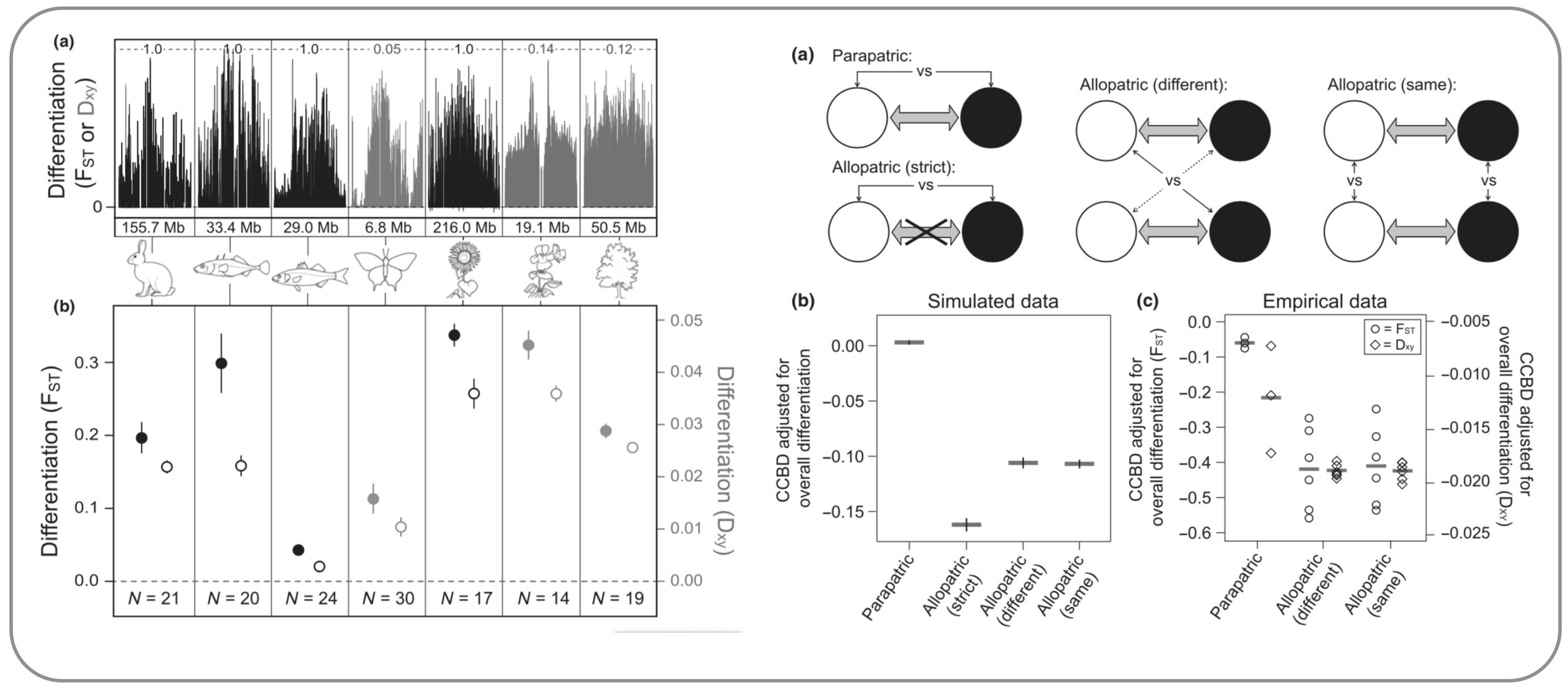
Recombination strongly influences genome-wide population divergence. Chromosome-scale patterns of genomic differentiation are similar across many organisms, with higher recombination at chromosome tips and lower recombination in chromosome centers. This variation in recombination, together with polygenic selection and gene flow, strongly shapes genomic patterns of divergence. In addition to describing this empirical pattern, we use simulations to quantify different genetic mechanisms that lead to elevated population divergence in regions of low recombination, including genetic hitchhiking and barriers to gene flow. We then test the predictions from these models by comparing allopatric and parapatric populations of stickleback residing in different or similar environments. (Berner & Roesti 2017)

Species divergence driven by resource competition and shared predation. By comparing co-occurring (sympatric) and allopatric populations of both threespine stickleback and prickly sculpin fish, we find that trait shifts occur in opposite directions between the species when they are sympatric. These shifts are evident in typical trophic traits and diet, as well as in traits that provide protection against large predators. Our study suggests that ecological character displacement, driven by resource competition, has increased the vulnerability of stickleback but decreased the vulnerability of sculpin to a shared predator (trout). This highlights the importance of indirect interactions between prey species – mediated by shared predators – in driving species divergence. (Roesti et al. 2022)
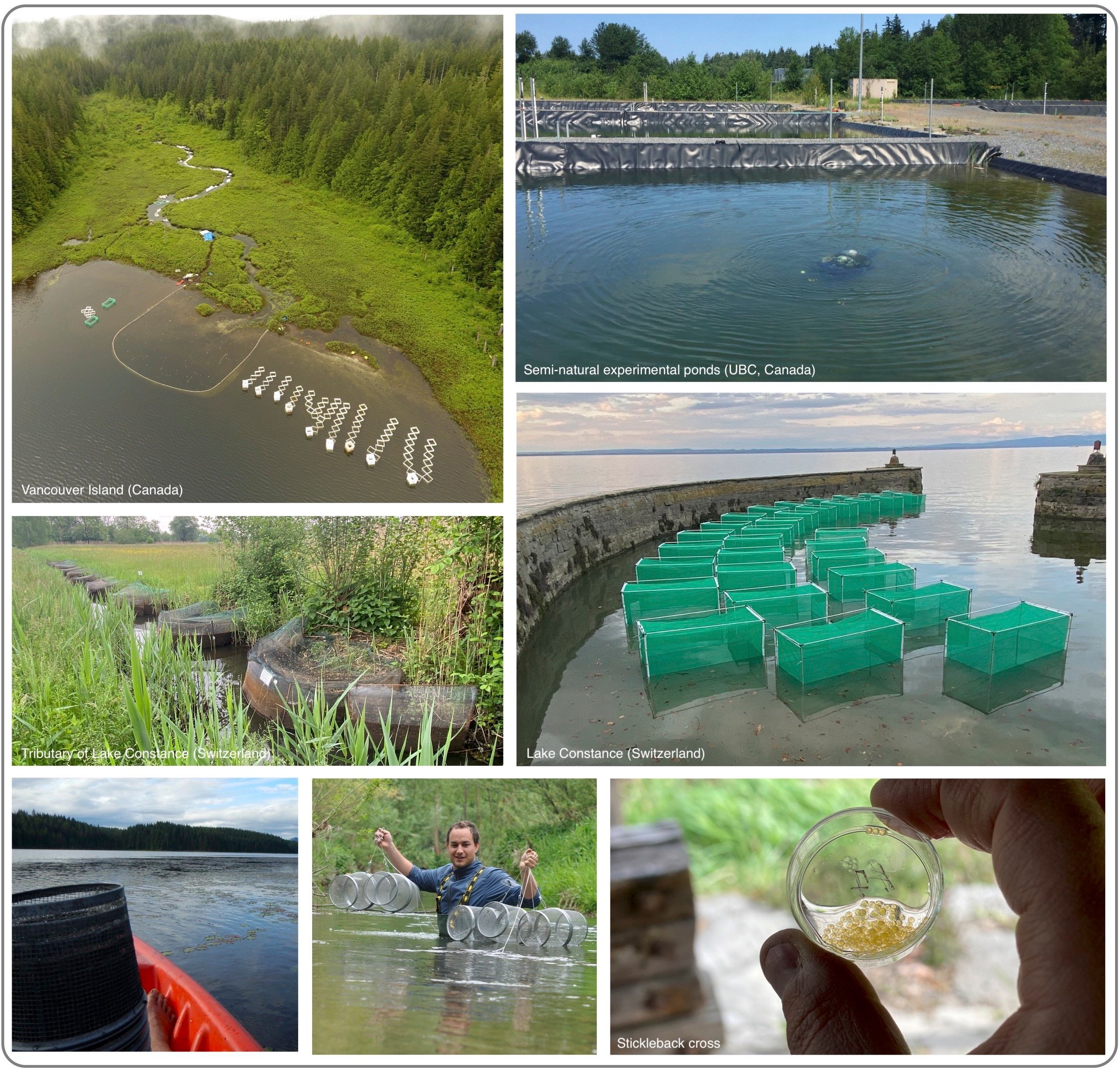
Field work and experiments. Fieldwork is a central part of my research, and I have recently developed a growing interest in conducting manipulative field experiments to better test causal relationships in eco-evolutionary processes.

On the (Un)Predictability of Speciation. Why can astronomers predict solar eclipses centuries in advance, but biologists cannot predict the birth of new species? In this essay, we take on that question through a playful yet serious thought experiment – the idea of a “speciation machine.” By examining the roles of complexity, chance, and pluralism, we ask what truly limits our ability to forecast evolution. We argue that building a predictive, integrative model of speciation could transform our understanding of how biodiversity originates – and perhaps even redefine how we think about evolution itself. (Roesti et al. 2024)

Genomic architecture of adaptation with gene flow. In this perspective, I summarize why and how adaptive loci are expected to cluster within the genome when local adaptation occurs in the presence of maladaptive gene flow. I focus in particular on the role of low-recombination regions in promoting such clustering. Despite growing interest in this topic, we still have a limited understanding of where adaptive loci are located in the genome. Although low-recombination regions appear to be promising hotspots for clustering, observed patterns may often have alternative explanations, including recombination-related biases in our genomic methods. I illustrate this bias using hundreds of previously published QTLs in threespine stickleback and suggest future directions to address these challenges through comparative genomics. (Roesti 2018)

Chromosomal inversions as a constraint to new adaptation. In this perspective, we reason and use simulations to illustrate that chromosomal inversions can limit adaptation to new habitats because inversions limit the reshuffling of existing genetic variation into newly favorable combinations. (Roesti et al. 2022)

The largest test of the Biotic Interactions Hypothesis. It is widely assumed that species interactions, such as predation, intensify from the poles toward the equator and may help explain the higher species diversity found in the tropics. We tested this so-called “Biotic Interactions hypothesis” in the open ocean using 55 years of catch-per-effort data from pelagic longline fishing. Surprisingly, we found that predation by large open-water fish is strongest at temperate latitudes, and predation is negatively correlated with species richness. These findings run counter to the predictions of the biotic interactions hypothesis. (Roesti et al. 2020)

A function trade-off between foraging and brood care – and not sexual selection – explains sexual dimorphism in cichlids. Cichlid fish species in East Africa’s Lake Tanganyika differ in their modes of parental care: in some species, only one sex or both sexes perform mouthbrooding, while in others, parental care involves no mouthbrooding at all. We predicted that, due to the likely dual function of gill rakers in both foraging and mouthbrooding, only species with uniparental mouthbrooding would show sexual dimorphism in gill raker morphology. Indeed, this is what we found. Our study offers a largely overlooked explanation for sexual dimorphism in nature – one that cannot be accounted for by sexual selection or by initial niche divergence between the sexes. (Ronco*, Roesti*, Salzburger* 2019)

A simple biotic change leads to strong genome-wide adaptation in stickleback. In many postglacial lakes in Western Canada, threespine stickleback and prickly sculpin co-occur and interact through mainly food competition and via shared predators. In some lakes, however, only stickleback are present, with no sculpin. We find strong and parallel genomic signatures of selection in stickleback associated with the presence or absence of sculpin. Moreover, the extent of phenotypic and genomic adaptive divergence is positively correlated. This study highlights the importance of indirect species interactions in driving evolutionary (genomic) diversification. (Miller, Roesti, Schluter 2019)

Left: Parallel adaptation from shared genetic variation, such as from pre-existing (standing) or introgressed variation, produces a distinct genetic signature within a genome. We predict this signature using simulation models, and then confirm it using genome-wide and targeted sequencing of natural stickleback populations. (Roesti et al. 2014)
Right: Chromosome-wide variation in recombination rate shapes differentiation and diversity within the stickleback genome. Recombination rate is consistently elevated towards the tips of chromosomes, and reduced in the center of chromosomes – a pattern that appears to be unrelated to the position of the centromeres, but instead, is related to functional constraints during meiosis. We further find that recombination rate variation influences nucleotide composition within a genome. (Roesti et al. 2013)

Genomic signatures of a morphological adaptation. Lake-stream divergence of stickleback in lateral plating and the associated molecular signatures (Roesti et al. 2015).

Phenotypic divergence vs. genomic divergence across several lake-stream stickleback populations. We studied stickleback from lakes and adjacent streams to characterize phenotypic traits and genome-wide signatures of habitat-specific selection. Our results reveal that gene flow constrains genome-wide differentiation between diversifying populations, and that the degree of phenotypic and genomic divergence is positively correlated. This study provides one of the first genome-wide demonstrations of how variation in recombination rate shapes genomic differentiation during diversification. (Roesti et al. 2012)

Left: Phenotypic plasticity or genetic differentiation? In this study, we found evidence for strong genome-wide differentiation between distinct lamprey ecotypes that were previously thought to be the product of phenotypic plasticity (Mateus et al. 2013).
Right: Phylogenomics of an adaptive radiation. Patagonotothen icefish species reveals incomplete species boundaries in this adaptive radiation (Ceballos et al. 2019).

What is limiting our ability to predict evolution? I here outline the two possible explanations: limited knowledge and the inherently unpredictable influence of stochasticity in evolution. (Roesti 2021)